
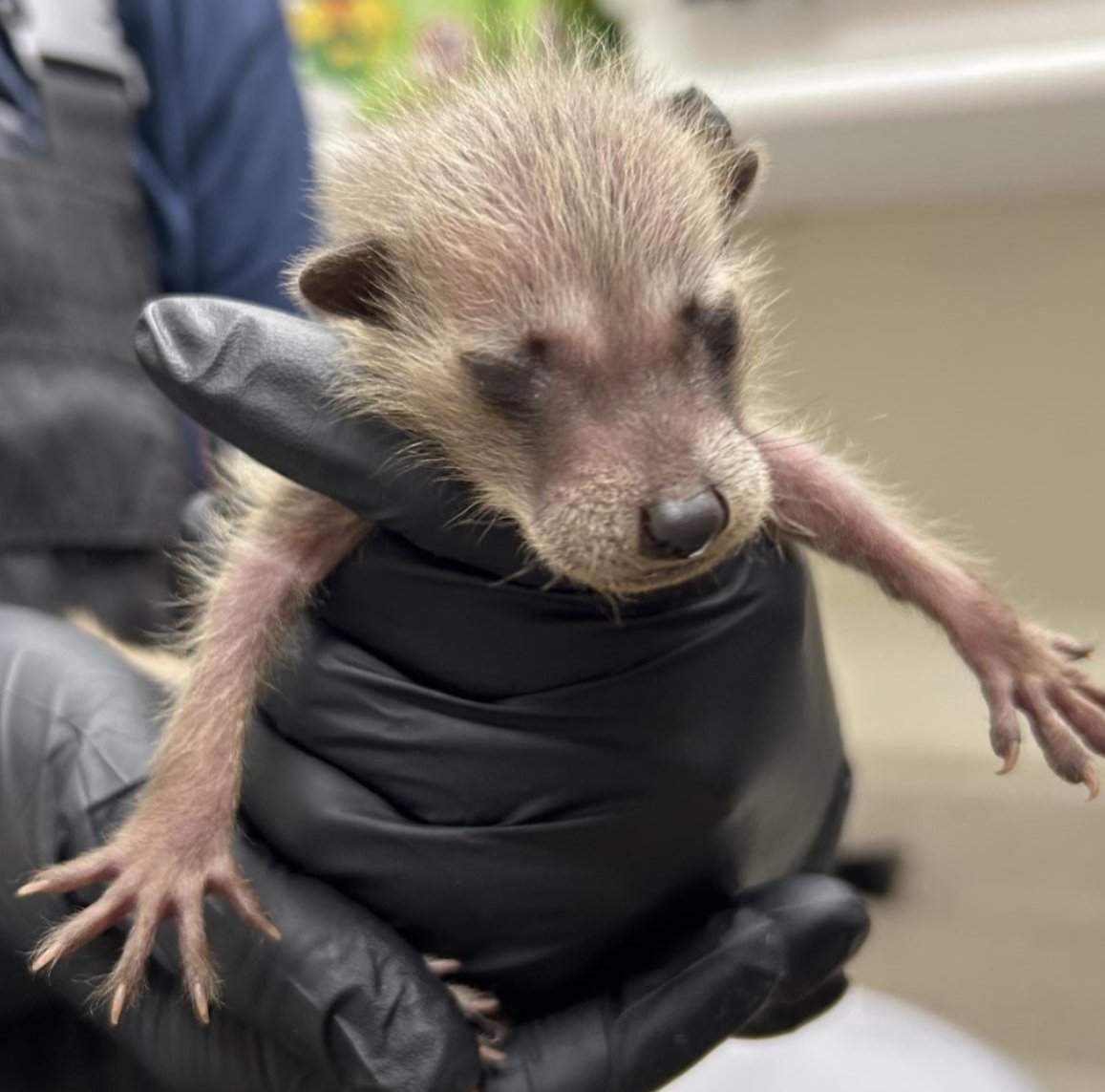
On May 29, five baby raccoons, about a week and a half old, eyes still tightly shut, were brought to Southwest Wildlife for care. When they arrived, each baby had a full intake exam. They were weighed, checked over, and placed in an incubator to keep them warm. Each individual was marked with a different color on their forehead for identification.
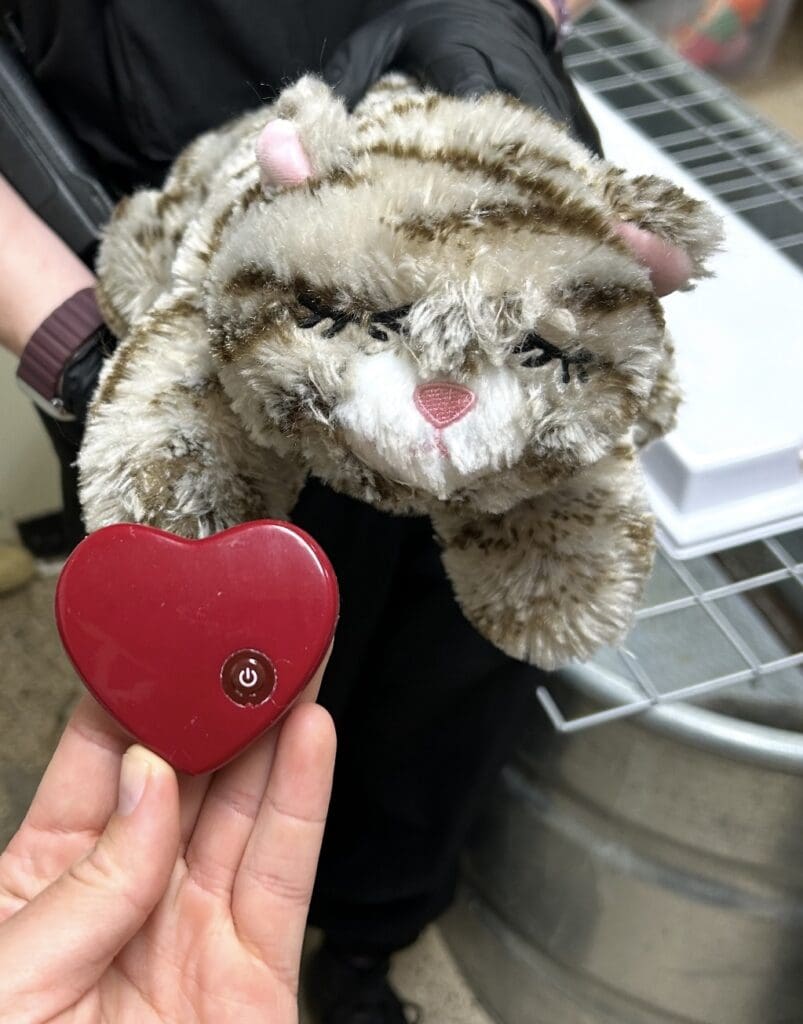
While nothing can truly replace the safety and comfort of their mother, we do everything we can to ease the transition for orphaned babies. One special tool we use is a heartbeat simulator, tucked inside a soft stuffed animal. This simple device mimics the steady beat of a mother’s heart, giving the babies something warm and familiar to snuggle with- something that feels a little like home.
These little raccoons now spend their days curled up with each other and their stuffed companions, comforted not only by warmth but by the steady thump of a “heartbeat.” It’s one small but meaningful way we work to reduce stress and provide a sense of calm during an otherwise scary and disorienting time.
In the wild, raccoon mothers are very resourceful. They seek out small, enclosed dens to raise their young. Ideally, they’ll find hollow trees and logs, but will occasionally use human structures like attics, sheds, and the spaces under decks. As raccoons adapt to shrinking wild spaces, it’s more important than ever to approach these situations with care.
If you suspect raccoons are denning around your home, please avoid using live traps as a first resort. These traps often remove the mother and leave behind vulnerable babies. Instead, contact a wildlife professional for advice. With the right support, mom and babies can safely relocate together.
These five babies may have had a rough start, but now they’re safe, warm, and on the road to recovery. Our ultimate goal is to raise these raccoon kits until they’re strong and healthy enough to return to the wild where they belong. It’s truly a privilege to care for them during this critical time in their lives.
May 2025