
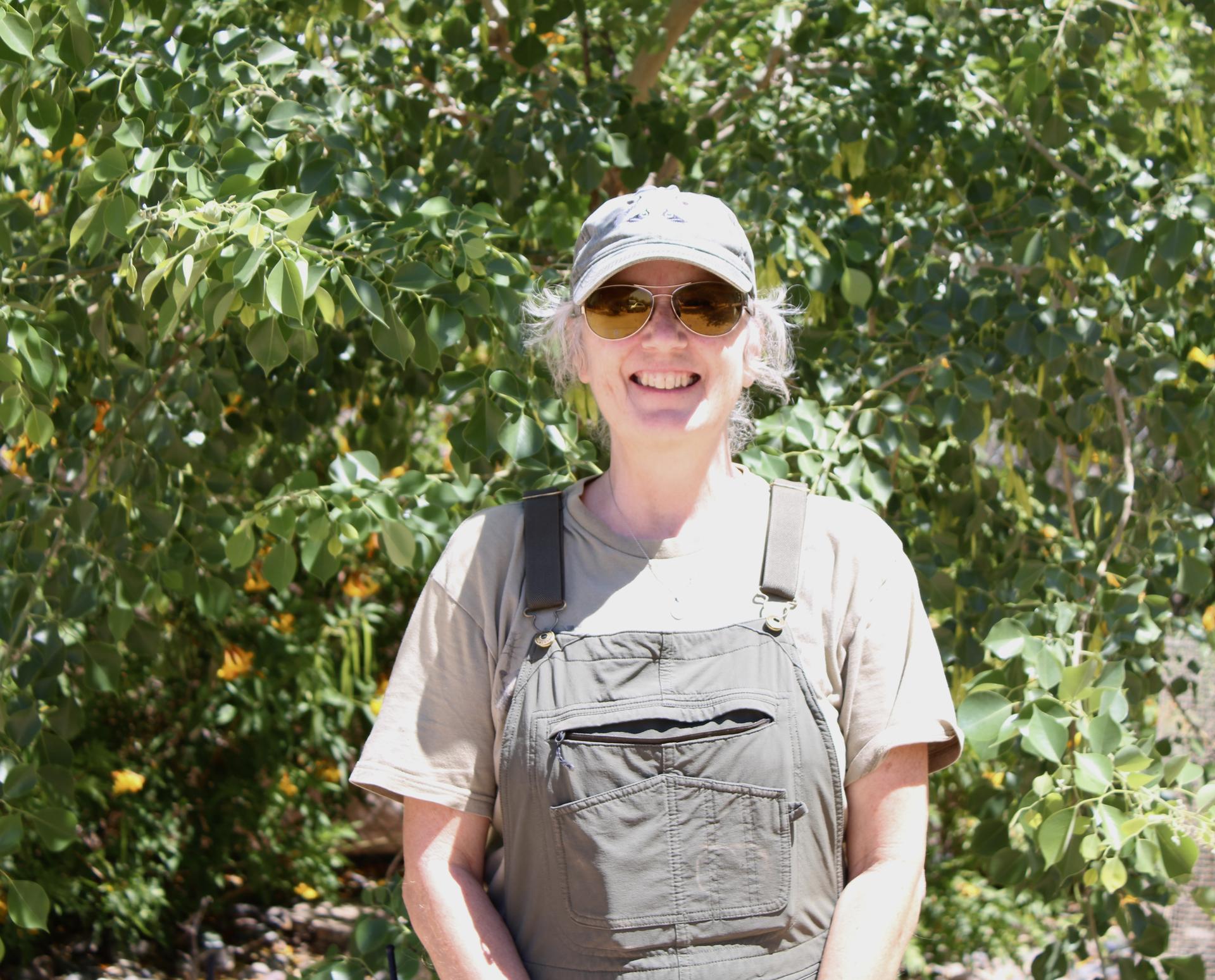
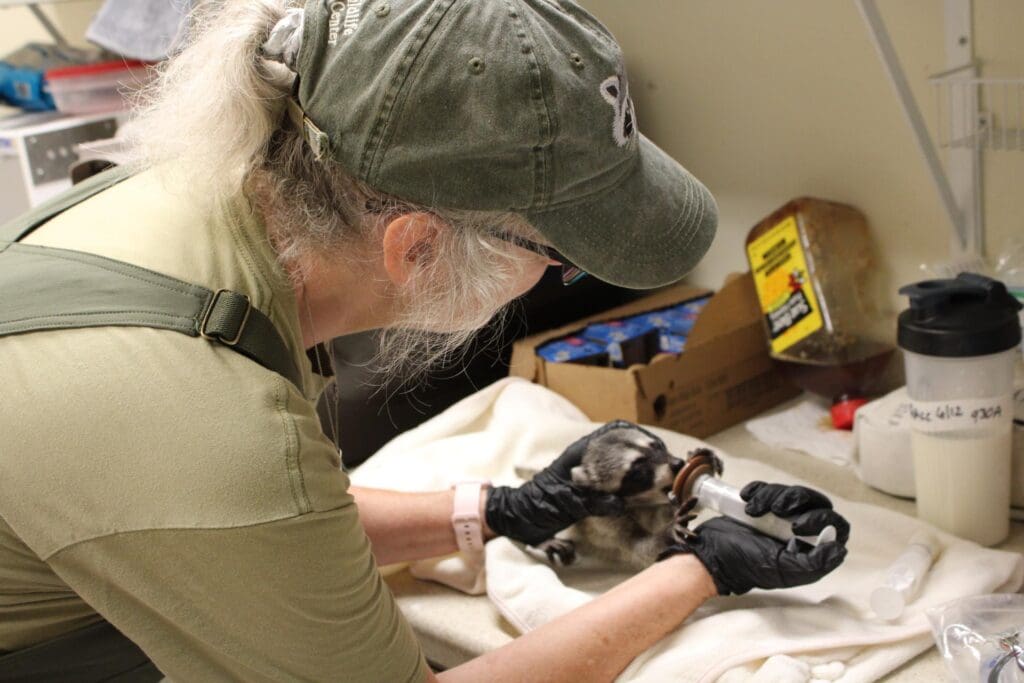
We’re excited to introduce you to Daphne Tyler, the heart and soul behind our wildlife rescue operations. As our Rescue Coordinator, Daphne is the person who makes it all happen, whether she’s rallying our volunteer rescue teams, answering calls on the 24-hour rescue line, or rolling up her sleeves working in Animal Care. We sat down with Daphne to learn more about being on the front lines of wildlife rescue.
How and why did you get involved in SWCC’s Rescue program?
I started as a Tour Guide, but knew right away that I wanted to be more hands on in the rescue process. In 2020, I started volunteering with the Emergency Call Team and knew this was the place I was destined to be. Soon after, I got my pre-rabies vaccinations and started rescuing- the rest is history! Now, I am the Rescue Coordinator and lead the rescue and call teams. In my spare time, I take a 24 hour shift on the phones and still actively rescue.
How do you assess whether an animal truly needs rescuing?
Mobility is the best way to determine if the animal truly needs to be rescued. We do not chase, trap, or dart animals, so if they can evade us, we are not able to rescue them. Many animals are able to exist and heal on their own, even with significant injuries. When determining if a baby is orphaned, that is a case-by-case basis and should be determined by calling our 24-hour emergency call line for guidance.
What is the best course of action if someone spots a wild animal in distress?
Take pictures and videos, and call our emergency rescue line to speak with one of our volunteers. They will help determine the best course of action. Sometimes, the situation may require us to monitor it for a while, while other times immediate rescue may be necessary. The more information you provide to our volunteers, the better we can assist the animal.
What’s something you wish people knew about the work you do?
What’s something you wish people knew about the work you do?
One thing people might not realize about wildlife rescue is that the primary goal is always to return the animal to the wild.
Our goal is to provide the necessary care to allow them to survive independently in their natural habitat. Wildlife rehabilitation focuses on restoring the animal’s health and natural behaviors, enabling them to function and thrive after release. This means minimizing human contact and handling during rehabilitation to prevent habituation or dependence.
The success rate of wildlife rehabilitation varies greatly depending on the animal and the severity of their condition. Unfortunately, many animals require humane euthanasia if they cannot be safely returned to the wild due to severe injuries or illnesses.
What are some of the most common situations or species you respond to in rescues?
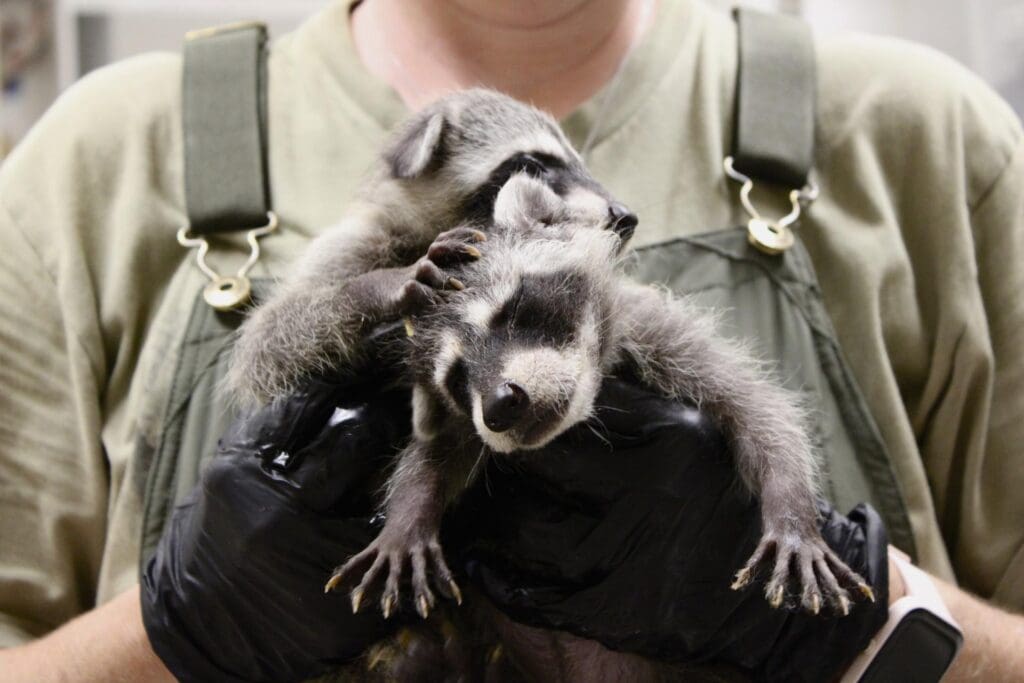
Unfortunately, the most common situation we encounter is animals being hit by cars, particularly javelinas, coyotes, bobcats, and raccoons. It’s also baby season, which leads to a high number of orphans. Since javelinas can have babies year-round, we get many of them during this time. The other common orphans we see are raccoons, coyotes, bobcats, skunks, and foxes.
What is your favorite part of wildlife rescue?
My favorite part of rescue is getting to be involved in all three aspects of our mission – rescue, rehab, and release! Being the Rescue Coordinator puts me in the unique position where I get to experience the entire journey.
I’m out in the field with rescues, then I work in Animal Care watching these animals heal and prepare to return to the wild, and finally I’m part of the release team that gets to send these beautiful creatures back home. It’s incredibly rewarding to see the full circle, from that initial rescue call to watching an animal run back to the wild. I honestly feel like the luckiest person in the world getting to do this work!
June 2025