
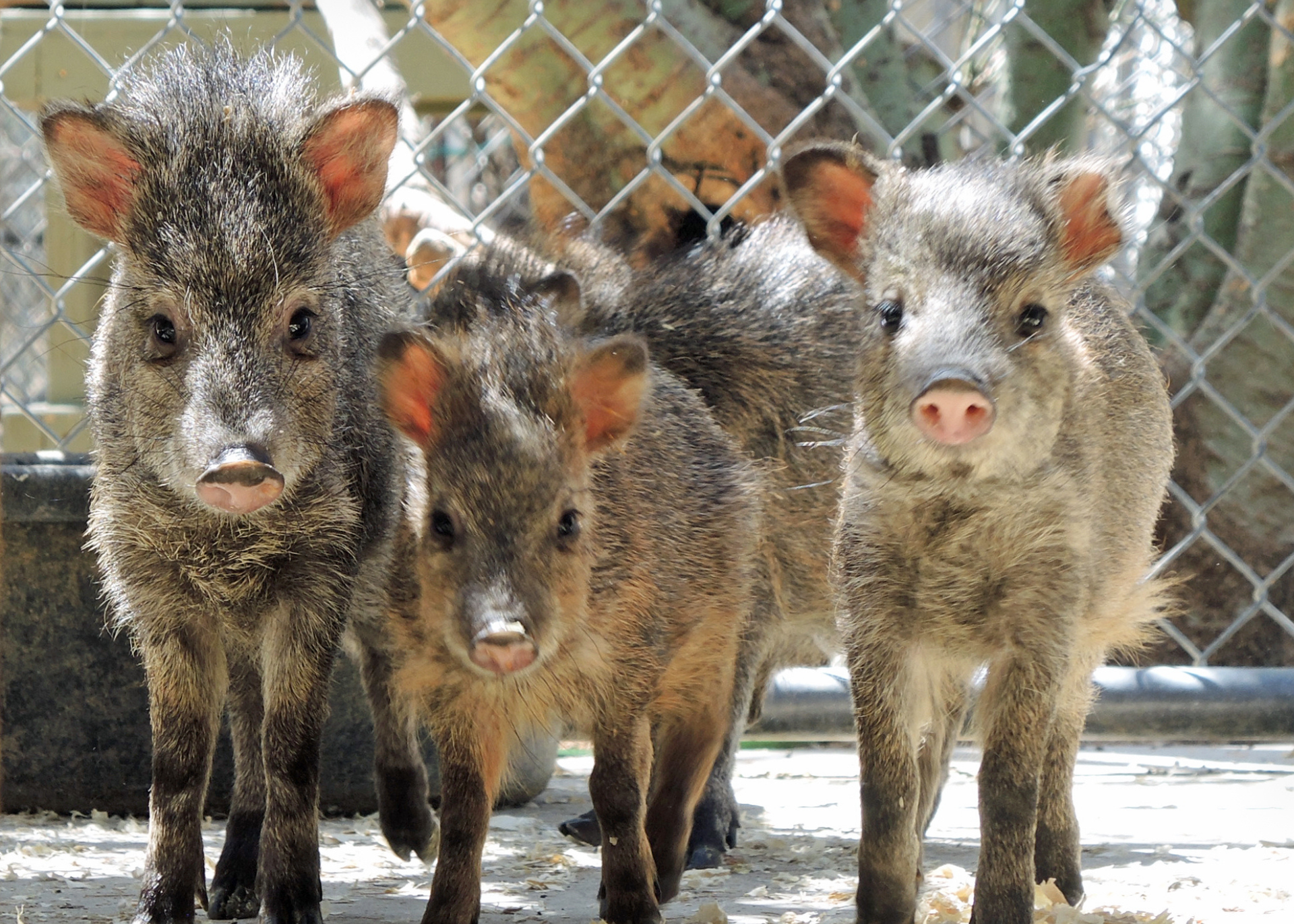
Javelinas make up a large part of the work we do. In 2025, about 34% of the animals admitted to our hospital were javelinas. Because they can breed year-round, we see babies in every season. These little ones, called reds, are tiny and fragile. Most arrive cold, weak, and in urgent need of care.
Javelinas are not meant to live alone. In the wild, they live in close family groups called squadrons. They sleep together, travel together, and rely on one another for safety. A single javelina raised on its own would not survive in the wild.
We are the only facility in Arizona licensed by the Arizona Game and Fish Department to create new javelina squadrons for release. That responsibility shapes every step of the care these animals receive.
Watch the video! These two javelina were rescued and are now in the “indoor pen” stage of rehab. They’ll soon be moved to a larger indoor/outdoor space with others around their own age.
The First Weeks
When newborn javelinas arrive, they are often only days old. At that age, they cannot regulate their own body temperature and depend entirely on regular feedings and careful monitoring. They’re fed a specialized formula and kept warm while our team watches closely for any changes in their health. In these early days, their survival depends on warmth, nutrition, and a consistent routine.
As they grow stronger, the babies move into a small indoor enclosure. Here, they begin exploring solid foods like canned pumpkin and soft vegetables while we slowly reduce their formula feedings. At first, they may have stuffed animals for comfort, but nothing replaces the presence of their own kind. As soon as their health allows, we begin introducing them to other young javelinas. Once the group is stable, they move to a larger enclosure with access to both indoor and outdoor space. They’re learning from the others what it means to be a javelina!
Forming a True Squadron
The final stage takes place in our releasable javelina pens. Here, young javelinas who once arrived as orphans or injured individuals are gradually brought together to form a functioning herd. Over time, the animals begin to bond and move together as a group. What began as a collection of vulnerable individuals slowly becomes a true squadron.
Release
Building a squadron takes time, space, experience, and understanding that healing wildlife is about more than treating injuries. It’s our job to help rebuild the social structure they need to survive in the wild.
We are so grateful to be able to do this work.
March, 2026