

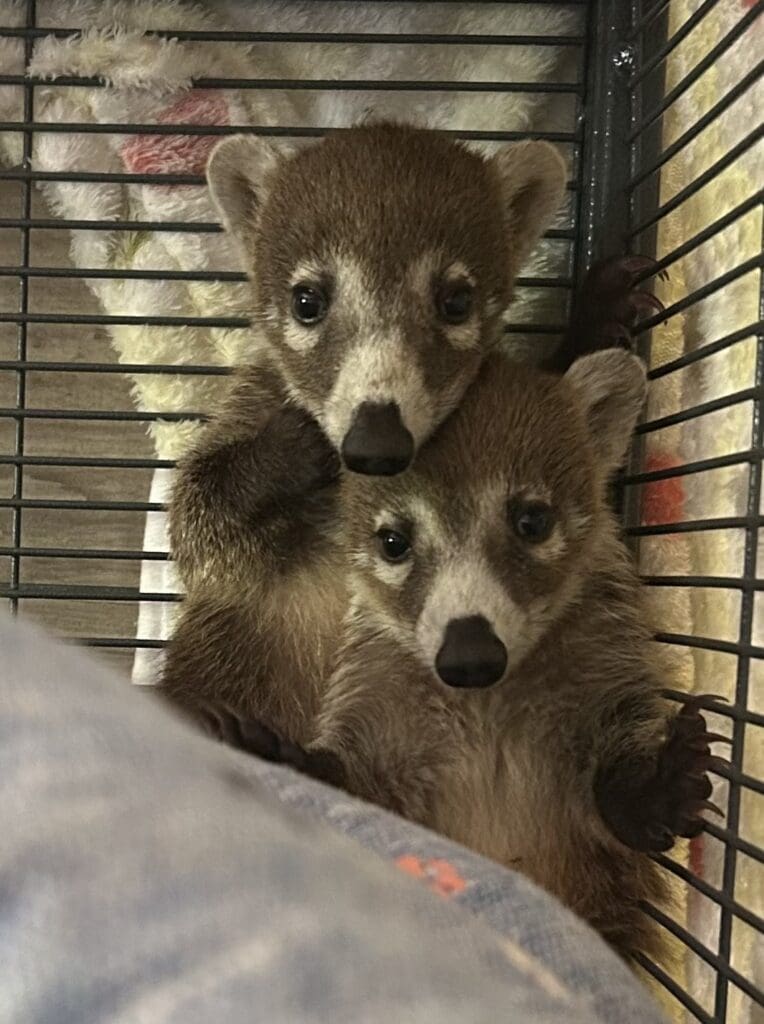
August has been the month of baby coatis! We typically don’t see many coati rescues throughout the year, let alone three babies in just two weeks. Yes, THREE.
The first little one came from a copper mine in Superior, Arizona, where employees discovered her trapped inside a piece of machinery. She was alone, lethargic, and appeared to have been fending for herself for several days.
Almost back-to-back, two more babies were found orphaned in Aravaipa Canyon with no sign of their bands. Female coatis live in groups with their young, while only adult males go solo. At such a young age, these babies absolutely depend on their band for safety and survival. On their own, they would not have made it.
Rehabilitating and releasing coatis brings a unique set of challenges because of their social dynamics. Like the many wildlife species we care for, the best outcome for these babies is reuniting them with their families. But that process is anything but simple and requires lots of patience, persistence, and a bit of luck.
For the coati from the copper mine, the search for her band is already underway. Our team has been returning to the area where they’re known to travel, and playing coati calls in hopes of getting mama’s attention. Even if the band is spotted, reintroduction isn’t guaranteed, but it’s worth every minute to try to get her back to her family. Updates to come!
Whatever their outcomes may be, whether they’re successfully released back to the wild or they find their forever home in sanctuary care, we’re in it for the long haul. Each of these babies deserves the best possible future, and we’ll make sure they get exactly that.
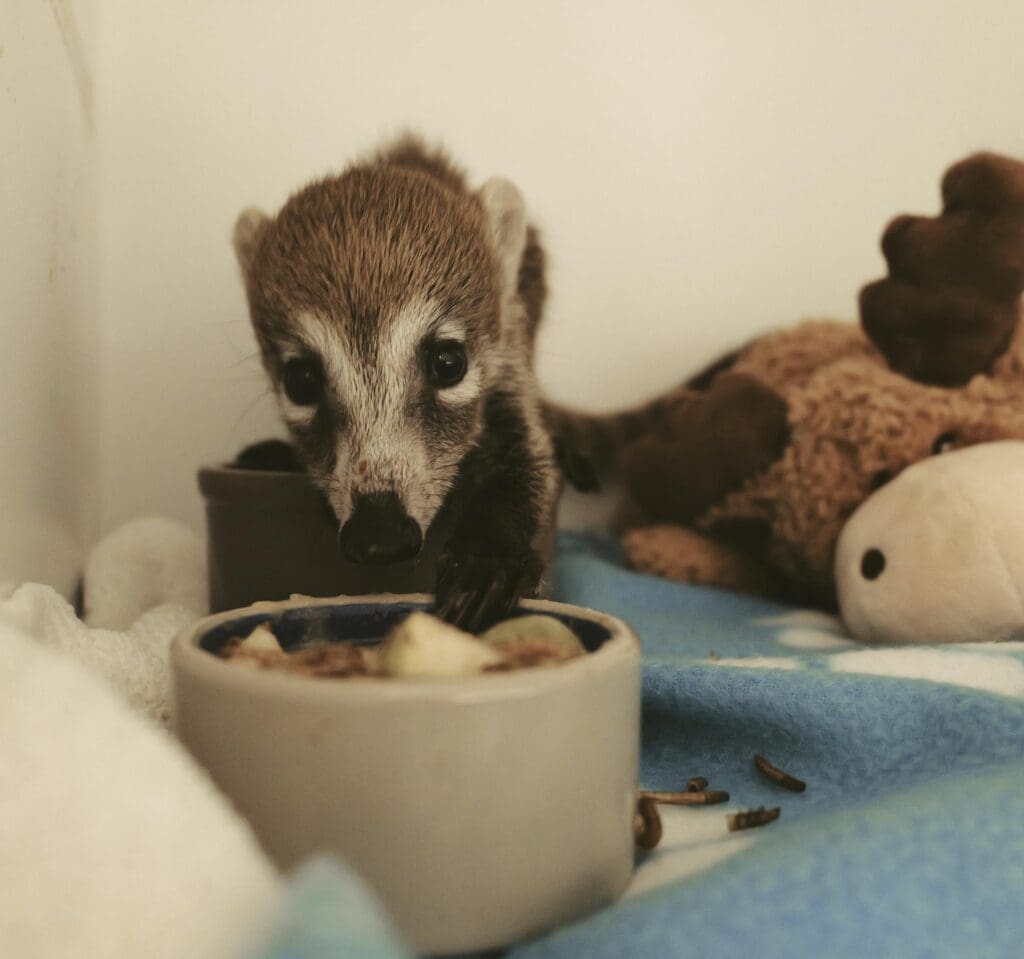
Want to help? There are so many ways you can make a difference for wildlife:
Donate- Your donations give hundreds of animals each year, like these baby coatis, a second chance at life. From medical care to specialized diets to the countless hours our team spends caring for them, every dollar helps us give wildlife the fighting chance they deserve.
Volunteer- Give your time and talents to directly support the animals at our sanctuary. Volunteers are the heart of what we do, and every hour helps us provide the best possible care.
Educate & Share- Just as important is spreading the word. Share our social media posts, talk about what you’ve learned on tours, and help your community understand how to coexist with wildlife.
The more people know, the better the outcomes for both humans and animals!
August 2025