
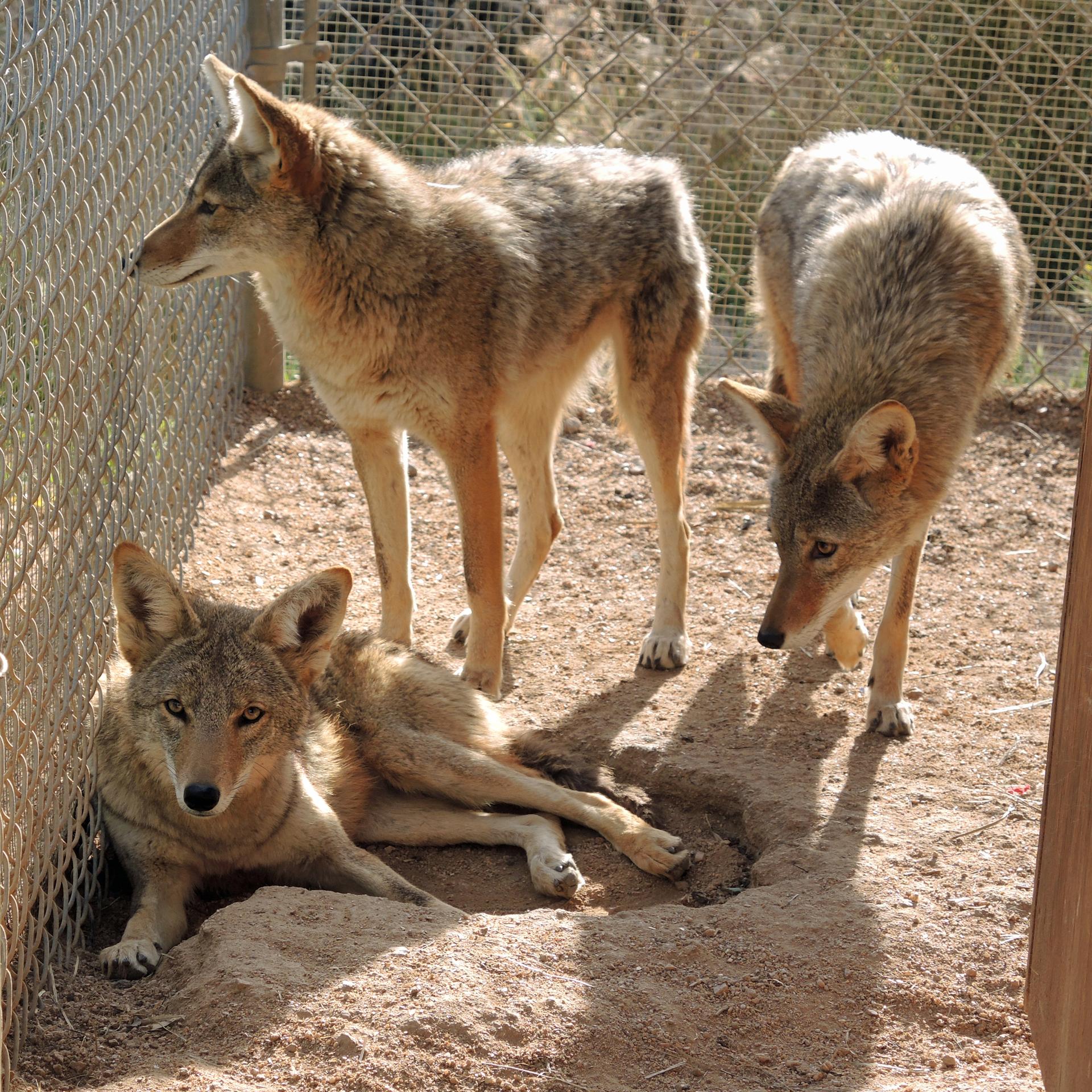
January and February mark coyote mating season! As these animals search for mates, you may notice more of them out and about, even if you live in suburban and urban areas. Coyotes don’t always get the best PR, but most misconceptions about coyotes, and other predators for that matter, come from a place of fear and misunderstanding. It’s our goal to share knowledge and make the unknown, well, more known, so we can better coexist with them.
Coyotes play an important role in our ecosystem. They’re opportunistic omnivores, meaning they eat a wide variety of foods, cactus fruits, mesquite beans, flowers, insects, rodents, lizards, small mammals, birds, and even snakes. By hunting small animals and scavenging, coyotes help keep the food web balanced and the ecosystem healthy!
During mating season, you might hear more coyote sounds, howls, high-pitched yips, and dog-like barks. These vocalizations help them mark territory and attract mates. Sightings are also more common this time of year as coyotes roam in search of partners. While they’re most active at dawn, dusk, and night, it’s not uncommon or a sign that something is wrong if you see one during the day.
Coyotes have a more loyal and vibrant love life than most people realize. They’re part of the small group of mammals, just 3 to 5 percent, that are considered monogamous. In a 2012 study published in the Journal of Mammalogy on urban coyotes in Chicago, researchers analyzed DNA from 18 litters and 96 individual coyote pups and found no evidence of “cheating” (in human terms). Every pup belonged to its parents, and pairs stayed together year after year, even in a city full of other coyotes and abundant food. Quite remarkable!

As coyote sightings may increase in the next few months, it’s important to remember that they are naturally wary of people. If you notice bold or unusual behavior, such as approaching humans, it’s often because they’ve become habituated. When wildlife loses its natural fear of people, it can lead to dangerous situations for both animals and humans. Coyotes may see small pets as prey and view larger dogs as threats, especially during mating season and later in spring and summer when raising pups.
Here are some simple steps, recommended by Project Coyote and Arizona Game and Fish Department, to help you coexist safely with coyotes as they search for mates.
- Never feed coyotes or other wildlife. Ask neighbors to do the same.
- Secure food sources like pet food, garbage, and fallen fruit.
- Supervise pets outdoors and keep them on a leash during walks.
- Don’t let dogs chase or play with coyotes.
- If walking a small dog at dawn or dusk, keep the leash short, do not use retractable leashes, and stay alert.
By respecting coyotes and giving them space, we can coexist safely while preserving the natural balance of our shared environment. If you encounter a coyote, calmly and confidently encourage it to move along by making loud noises or waving your arms. This helps reinforce their natural wariness of humans and keeps everyone safe.
January, 2026