
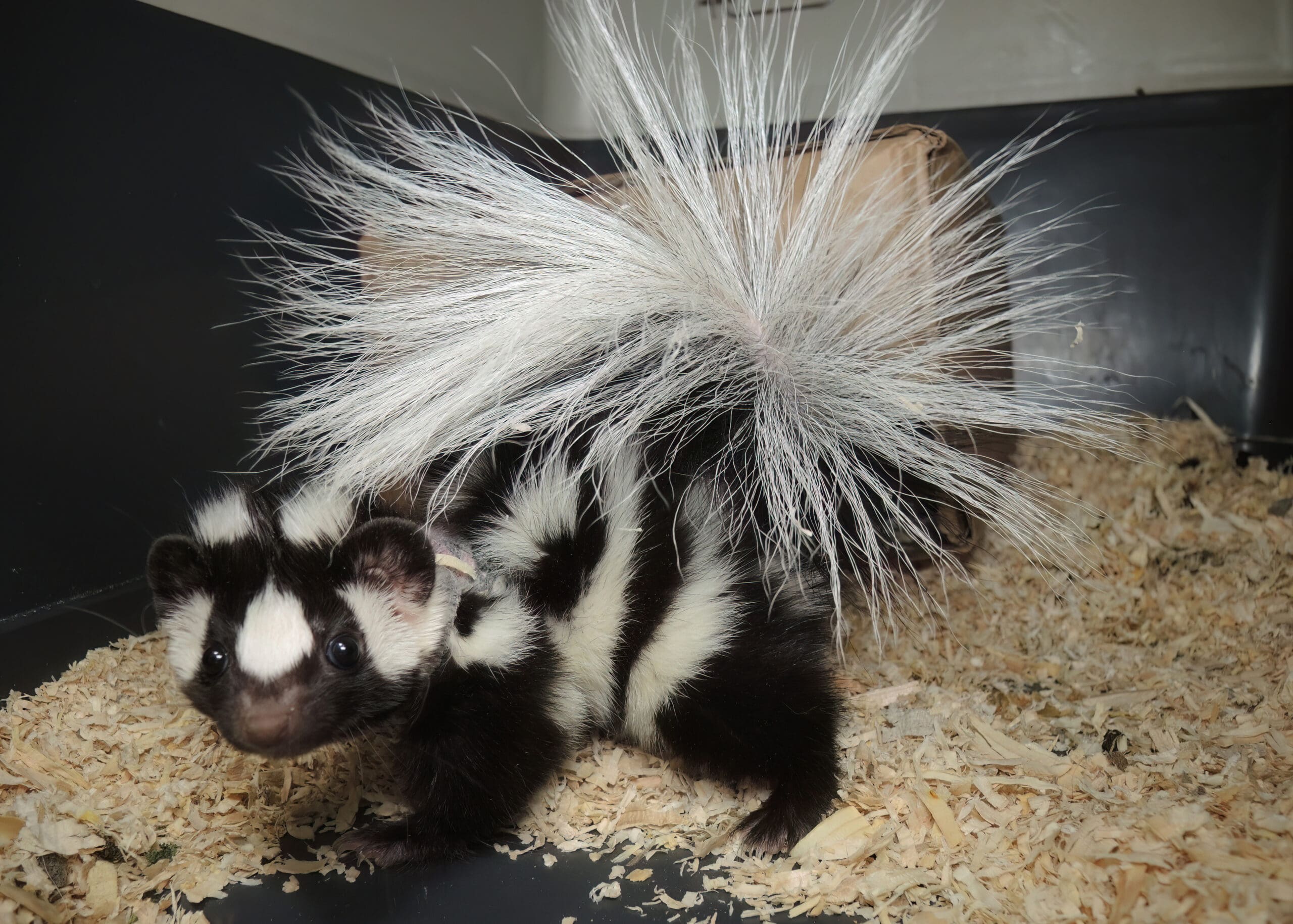
If someone spots a skunk in their yard, the first reaction is often fear, and at Southwest Wildlife, we hear it all the time on our Emergency Rescue Hotline. But the truth is, skunks are some of the hardest-working animals in Arizona’s ecosystem- and right now, we’re caring for 18 skunks that are getting a second chance.
Daphne, our Rescue Coordinator, says it best:
“Skunks don’t get enough credit in Arizona. They’re out there every night doing quiet, unglamorous work that keeps the desert running.”
While most of us are asleep, skunks are hard at work eating beetles, grubs, scorpions, mice, and other small animals that would quickly multiply without natural predators. They’re nature’s pest control, helping keep ecosystems balanced without pesticides or human intervention.
Their work doesn’t stop there. Every time a skunk digs for insects, it’s naturally aerating the soil, allowing water and oxygen to reach plant roots more easily. As omnivores, they also eat fruits and berries, helping disperse native seeds throughout the landscape. Some even play a small role in pollination as they move from plant to plant while foraging.
Perhaps most importantly, skunks are an essential part of the food web. They help sustain predators like bobcats and coyotes while keeping prey populations in check, creating the balance that healthy desert ecosystems depend on.
They’re small. They’re often misunderstood. And they’re absolutely essential!
Click below to watch some of the skunks currently in our care- you may just find yourself seeing these remarkable animals in a whole new light.
July, 2026