
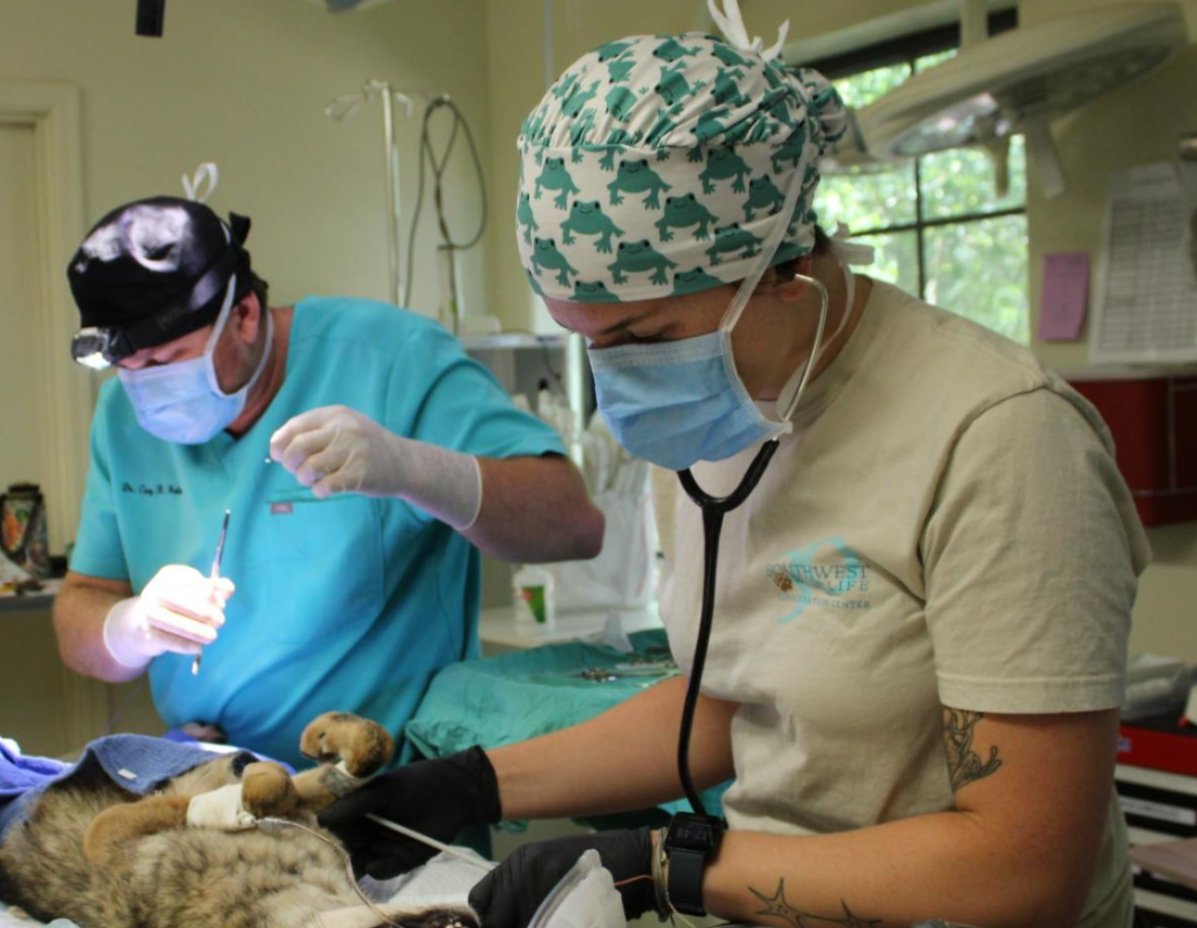

Meet Mallory, SWCC’s Lead Veterinary Technician! We sat down with Mallory for a Q&A to learn more about her path into wildlife medicine and to shed some light on the incredible work our clinic team does every day to care for Arizona’s wildlife.
What does a typical day look like for you in the vet clinic?
Cleaning, feeding, medicating, and planning! Whether we’re caring for animals currently undergoing treatment or checking in on our long-term sanctuary residents, our days are filled with medical evaluations and treatment planning. We provide care for hundreds of animals, so each day involves prioritizing cases, reviewing treatment responses, and adjusting plans as needed. Wildlife emergencies are a constant; animals come to us from all over the state needing immediate intervention.
How did you get involved in wildlife medicine?
I’ve been in veterinary medicine for about ten years now. I started out in shelter medicine and, during college, worked at an ER and specialty hospital. Those early experiences really taught me the foundations of this work.
I earned my degree in biology with a certification in wildlife management and ecology, originally thinking I’d go into game management. I went on to become a Certified Veterinary Technician (CVT) and continued working in vet med until I came across the job opening at SWCC.
I’ve always loved the desert and have lived all over Arizona. To me, Arizona’s wildlife is the most fascinating and beautiful of anywhere I’ve been. Although game management isn’t my path anymore, I know I’ll never leave the field of wildlife medicine. This is where I can offer the skills I’ve worked so hard to build to animals that often have no one else looking out for them.
From the first day I started at SWCC, I knew working with wildlife is all I’ve ever needed. It’s exactly where I’m meant to be.
What role does the vet clinic play in the rehabilitation and release process?
Every single animal that comes through Southwest Wildlife enters through our clinic doors. From critical trauma cases to those just needing a quick health check, we evaluate and design individualized treatment plans for everyone. The clinic is where the journey begins. We track progress, adjust care, and support the animal through each stage of healing. At any given time, we’re managing care for hundreds of wild patients, all with unique needs and stories.
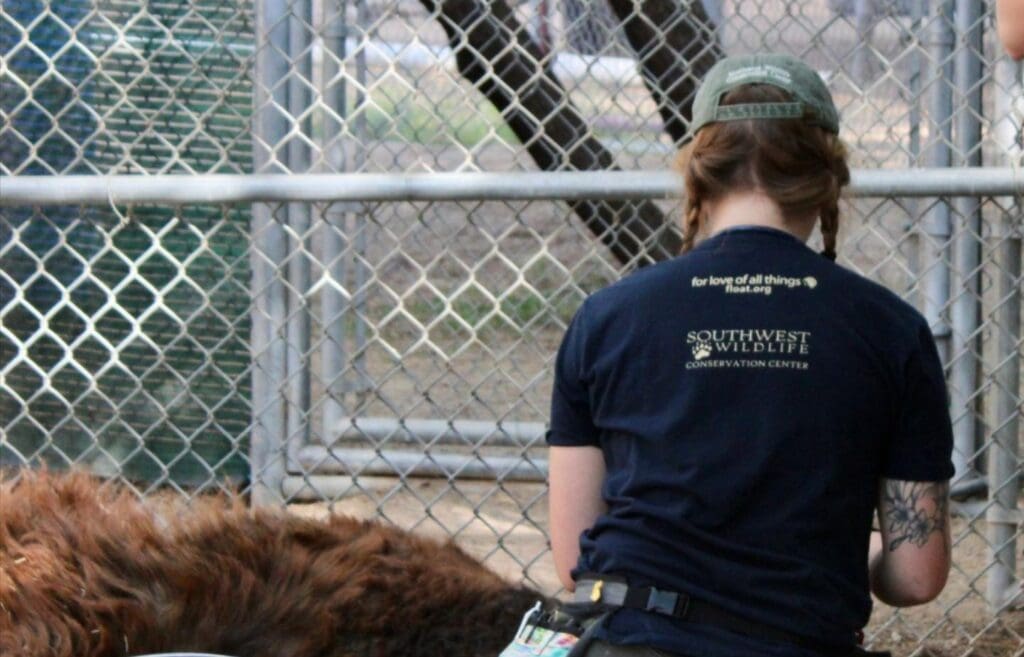
Can you share a memorable experience with an animal you’ve cared for?
I’ll never forget the first baby javelina that completely stole my heart. She was just two days old, but she made sure we all knew she was in charge! Helping her survive as an orphan was both humbling and unforgettable.
Now she’s thriving, living in an outdoor enclosure, and getting ready for release. Watching her grow has been one of the highlights of my wildlife journey. She’s now a big girl in an outside pen waiting for release!
What are some of the biggest challenges of caring for wildlife?
Learning when to intervene and when to step back and let the animal’s instincts take over is one of the hardest parts. Wildlife doesn’t always need us in the ways domestic animals do. Sometimes the best thing we can do is give them space and time to heal on their own.
What’s the most rewarding part of your job?
Working so closely with these animals and getting to be part of this incredible sanctuary, truly one of the most beautiful places I’ve ever seen. Every day is a gift here. I feel so fortunate to be part of a team that’s passionate, knowledgeable, and committed. And let’s be honest, how many people can say they’ve placed IVs on black bears and mountain lions?
July 2025