
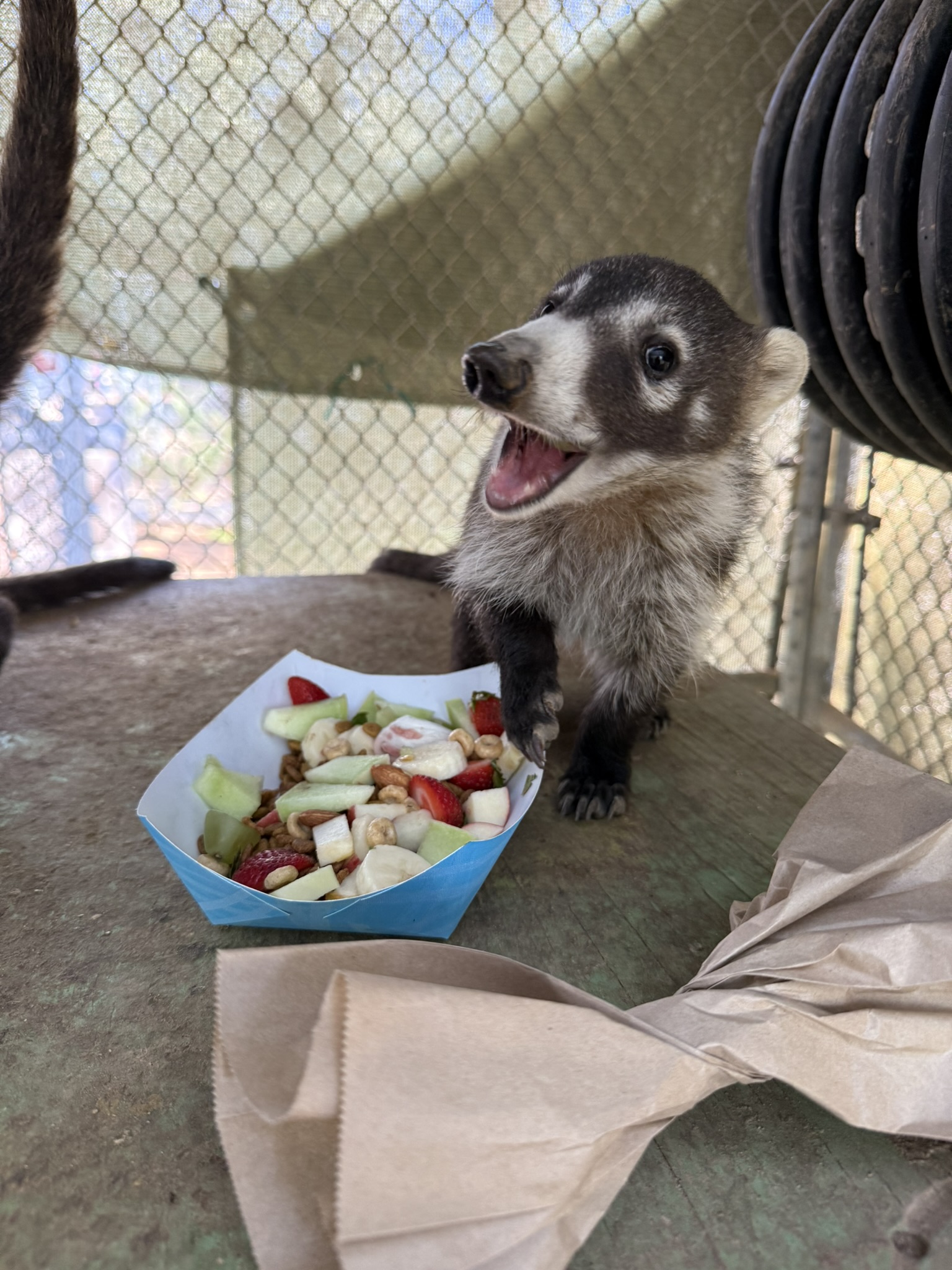
Since December 3rd was World Coati Day, we wanted to spotlight them this week! In Arizona, we have one species of coati: the white-nosed coati. If you’ve never seen one in the wild, you’re not alone. We hear from many of our tour guests that they had no clue they lived here in Arizona.
White-nosed coatis (Nasua narica) are the only coati species found in the United States, and Arizona marks their northernmost range. They thrive in rugged canyons and oak woodlands, typically at elevations between 4,500 and 7,500 feet. Unlike their raccoon relatives, which are mostly nocturnal, coatis are active during the day. Females and the little ones live in groups called bands or troops, which can have up to 30 individuals, while adult males tend to be solitary except during breeding season.
They’re commonly spotted in southern Arizona, but their range extends as far north as Flagstaff. If you’re hiking in a wooded area, keep your eyes out for a band rooting around in the dirt for insects, fruit, or small vertebrates. They also have an interesting adaptation that allows them to rotate their feet 180 degrees, letting them climb down trees headfirst.
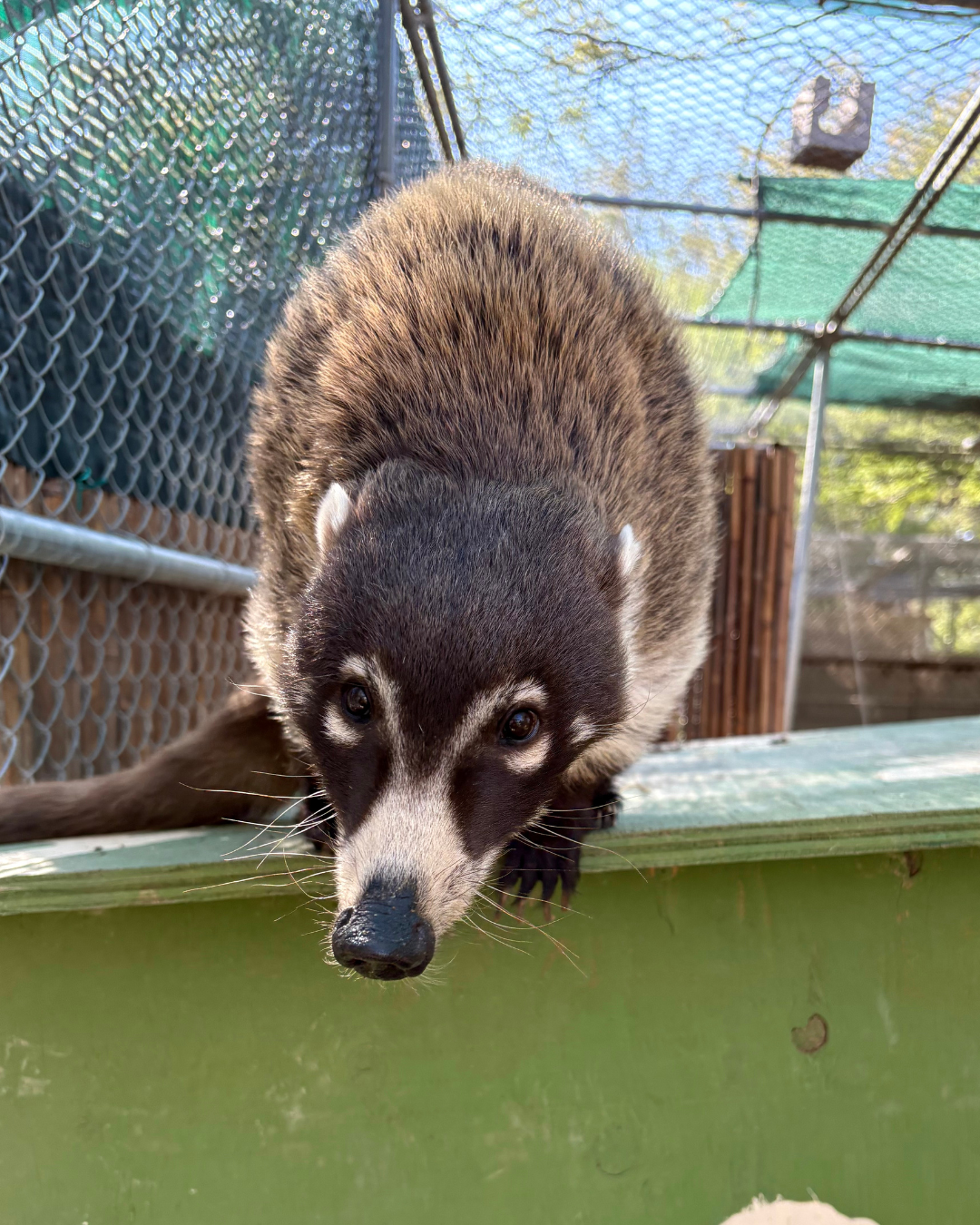
Izzy- One of our sanctuary residents. (White-nosed coati)
While the white-nosed coati is our local species, it’s just one of four found across the Americas. South America is home to the brown-nosed coati (Nasua nasua), which ranges widely across the continent.
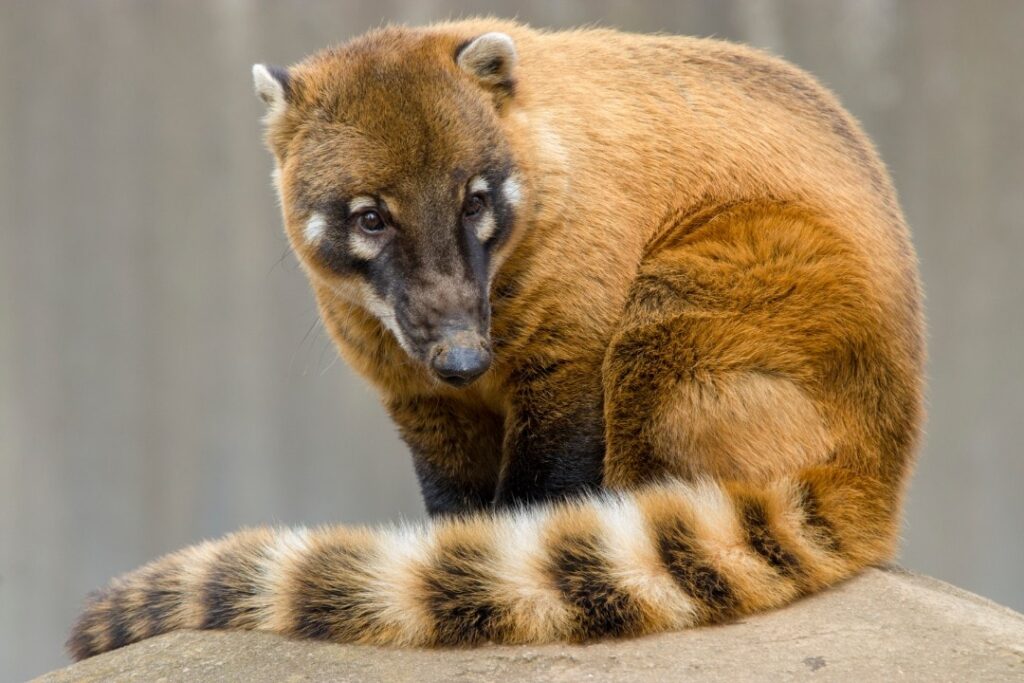
Western Mountain Coati (No available photo of the eastern mountain coati)
The two others are notably smaller than the others. The western mountain coati (Nasuella olivacea) lives in high-elevation forests in South America, while the eastern mountain coati (Nasuella meridensis) is endangered, rarely seen, and has only been observed in Venezuela.
Note: There is scientific debate about whether the eastern and western mountain coatis are truly separate species or simply isolated populations of one, due to limited genetic data.
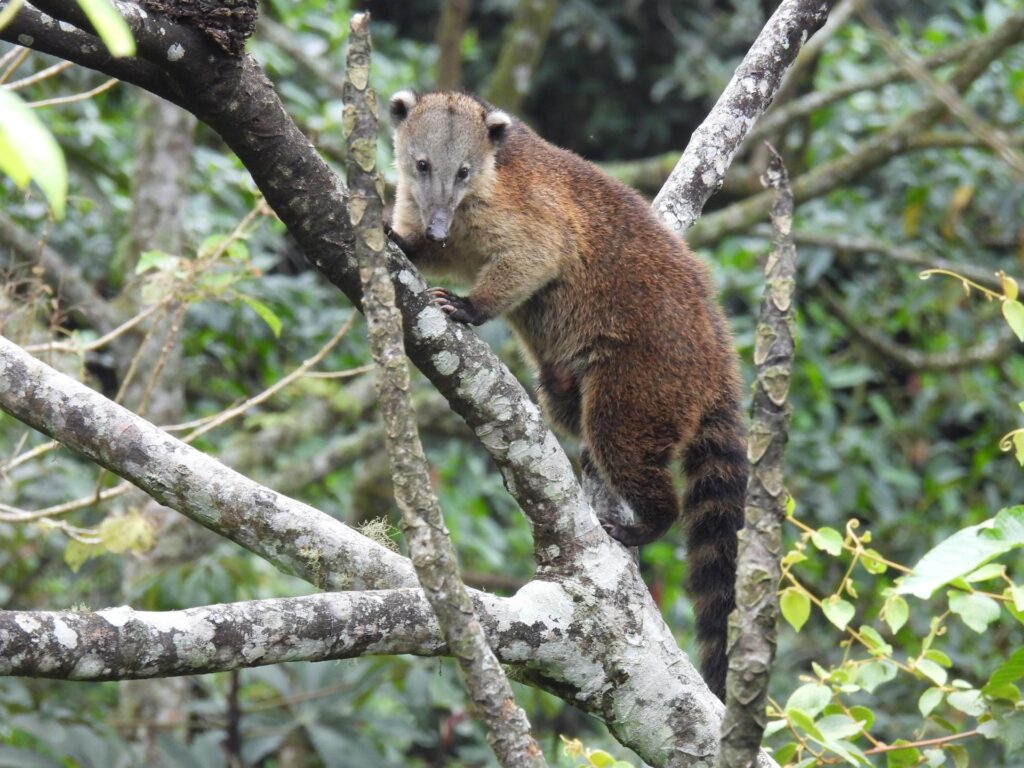
Coatis play a vital role in Arizona’s ecosystems. As they dig for food, they help aerate the soil and disperse seeds across the landscape, but like many wild animals, they face real challenges from habitat loss and sometimes, human interference. Coatis are awfully adorable, but feeding them or keeping them as pets is never a good idea. The best way to appreciate them is from a respectful distance and let them maintain their natural behaviors.
One interesting coati fact: They’ve been observed rolling tarantulas around on the ground to remove the spiders’ irritating hairs before eating them!
We’re fortunate to care for coatis here at SWCC and have three on the tour route, Chi, Izzy, and Copper. All three are in permanent care after either being orphaned or, in Copper’s case, being kept as an attempted pet. They’re wonderful ambassadors for their species and a reminder of why wild animals belong in the wild. Come take a tour and meet them!
December, 2025